
Composting is one of the most rewarding practices for any home gardener or organic farmer. It transforms everyday kitchen scraps and yard waste into nutrient-dense “black gold” for your soil. However, even seasoned growers encounter frustrating roadblocks along the way.
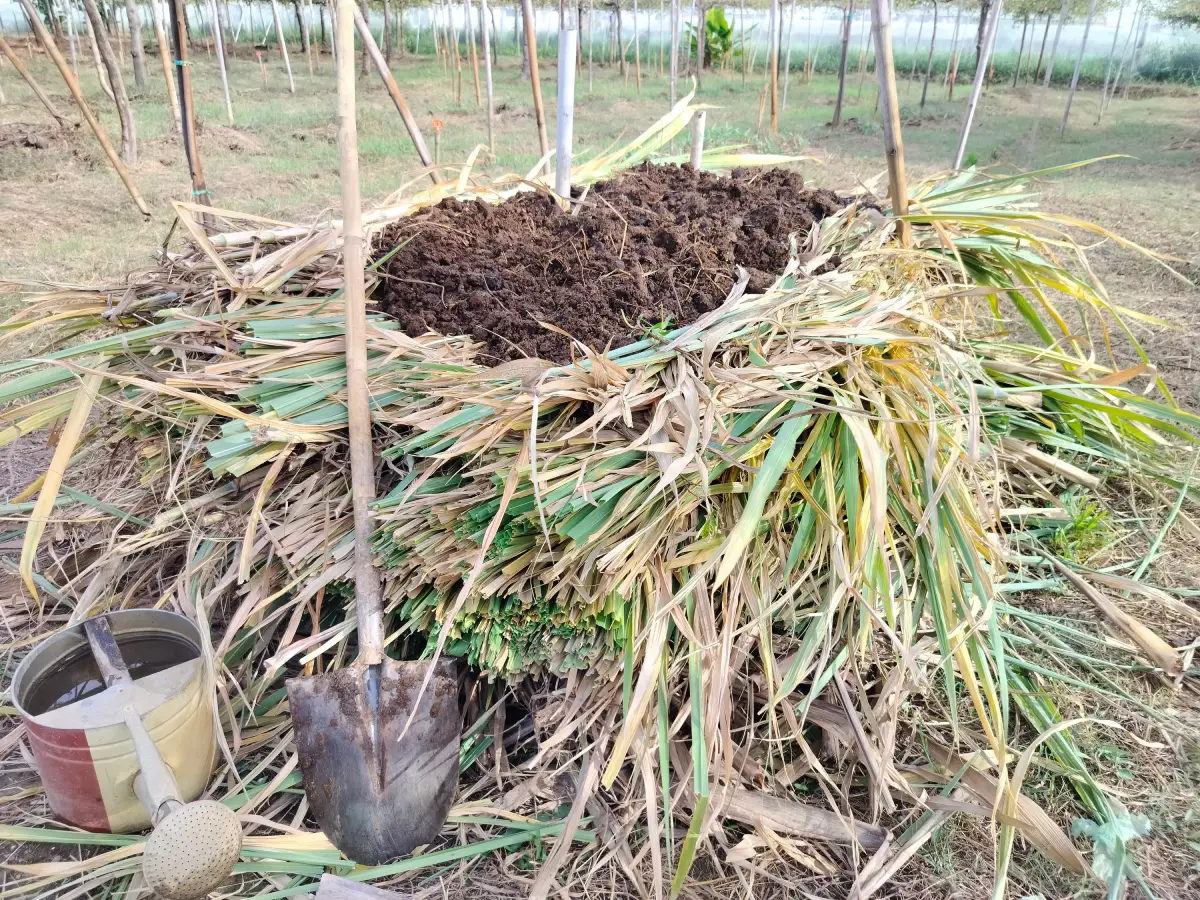
At Thuc Farm, we maintain large-scale organic compost piles year-round to nourish our fruit trees and vegetables. Through years of hands-on trial and error, we have learned that every compost issue—whether it is a foul odor, a stubborn cold pile, or an invasion of pests—is simply a sign of an imbalance in nature.
In this ultimate compost troubleshooting guide, we break down the 4 most common compost problems, explain the science behind why they happen, and provide practical, farm-tested solutions to get your pile back on track.
1. Problem: My Compost Pile Stinks (Foul Odors)
A healthy, active compost pile should smell like fresh forest earth. If your composter emits a harsh stench—resembling rotten eggs, ammonia, or sour garbage—your decomposition process has gone off course.
Why It Happens
Foul odors occur when the pile turns anaerobic (lacks oxygen). This happens due to two main reasons:
Too Much Moisture / Nitrogen: Adding excessive wet “green” materials (like kitchen scraps or fresh grass clippings) without enough dry “brown” materials (like dried leaves or cardboard).
Poor Air Circulation: The material has become compacted, preventing oxygen from reaching the beneficial aerobic microbes.
How to Fix It
Add Brown Materials: Mix in dry, carbon-rich materials like shredded cardboard, dry leaves, or straw to absorb excess moisture.
Aerate the Pile Immediately: Turn the pile thoroughly from bottom to top to introduce fresh oxygen.
Pro Farm Tip: At Thuc Farm, whenever a pile starts holding too much moisture after heavy rain, we use a manual turning tool to loosen the core. If manual turning feels too labor-intensive, using a dedicated compost aerator tool makes poking air holes into the center effortless.
Deep Dive Guide: For step-by-step instructions on diagnosing specific smells (like ammonia vs. sulfur), read our complete guide on how to fix smelly compost.
2. Problem: Maggots or Worms Wriggling in the Bin
Opening your compost bin only to find hundreds of white wriggling larvae can be alarming for any gardener.
Why It Happens
These larvae are usually the offspring of Black Soldier Flies (BSF) or houseflies. Flies are naturally attracted to exposed, wet food waste—especially meat, dairy, oil, or sweet fruit scraps. While Black Soldier Fly larvae are actually excellent decomposers, an overpopulation signals that your bin is too wet and nitrogen-heavy.
How to Fix It
Bury Your Greens: Never leave fresh food scraps exposed on the top layer. Always cover them with a 3- to 4-inch layer of dry leaves, sawdust, or shredded paper.
Balance the Moisture: Add dry carbon materials to dry out the environment. Fly larvae thrive in soggy conditions and struggle in drier, well-aerated piles.
Secure Your Bin: Ensure your container has a tight-fitting lid or a fine mesh screen to prevent adult flies from laying eggs.
Deep Dive Guide: Want to know if you should destroy them or let them work? Check out our detailed breakdown on how to handle maggots in compost.
3. Problem: The Compost Pile Is Cold and Not Heating Up
A hot compost pile (reaching temperatures between 130°F and 150°F / 55°C to 65°C) kills weed seeds and plant pathogens while breaking down material rapidly. If your pile remains cold and inactive, the decomposition process will drag on for months.
Plaintext
Ideal Compost Conditions:
┌─────────────────────────┬─────────────────────────┐
│ C:N Ratio               │ 30:1 (Browns to Greens) │
├─────────────────────────┼─────────────────────────┤
│ Moisture Level          │ 40% - 60% (Damp sponge) │
├─────────────────────────┼─────────────────────────┤
│ Ideal Core Temperature  │ 135°F - 150°F (57°-65°C)│
└─────────────────────────┴─────────────────────────┘
Why It Happens
A cold pile usually suffers from one of three shortages:
Lack of Nitrogen (Greens): Too many dry leaves or wood chips without enough green food waste or manure to feed the microbes.
Lack of Moisture: Microbes need water to survive and move around.
Pile Size Is Too Small: Piles smaller than 3x3x3 feet (1 cubic yard) struggle to retain the ambient heat generated by microbial activity.
How to Fix It
Add Nitrogen Boosters: Mix in fresh green grass clippings, coffee grounds, or organic nitrogen fertilizers to kickstart microbial activity.
Check Moisture: Squeeze a handful of compost material. It should feel like a wrung-out sponge (a few drops of water should come out). If it feels dry, water it lightly while turning.
Monitor the Core: At Thuc Farm, we never guess the temperature of our piles. Inserting a long-stemmed probe into the center gives an accurate reading so we know exactly when to turn or feed the pile.
Deep Dive Guide: Learn how to revive an inactive pile with our guide on why your compost is not heating up.
4. Problem: Pests, Ants, or Rodents Invading the Bin
Pests like mice, rats, ants, and wasps turn a peaceful backyard composting experience into a nuisance.
Why It Happens
Ants and Wasps: Indicate that the pile is too dry and unbothered. Ants love building nests in dry, wood-heavy compost piles.
Mice and Rats: Attracted by cooked food, meats, bones, dairy, fat, or unburied sweet fruits.
How to Fix It
For Ants: Add water and turn the pile frequently. Disrupting their environment and raising moisture levels will force ants to relocate immediately.
For Rodents: Strictly avoid adding meat, dairy, oils, or cooked grains. If you live in an urban or suburban area with high pest pressure, consider upgrading from an open bin to an elevated, rodent-proof tumbler.
Pro Recommendation: If ground space is limited or rats are a constant threat in your neighborhood, a sturdy tumble composter for small yards keeps your organic waste elevated off the ground and completely sealed from wildlife.
Deep Dive Guide: Read our full analysis on good vs. bad bugs in your compost bin to identify friendly decomposers versus unwanted pests.
Quick Reference: Compost Troubleshooting Matrix
Use this quick-reference table to diagnose and fix your compost pile in seconds:
| Symptom / Observation | Primary Cause | Quick Fix Action |
| Smells like rotten eggs or ammonia | Too wet / Lack of oxygen | Turn pile, add dry browns (shredded paper/leaves) |
| White maggots / Fly larvae visible | Exposed food waste / High moisture | Cover food scraps with browns, dry out the pile |
| Pile is dry and nothing is happening | Lack of water / Lack of greens | Add fresh green waste/water, turn thoroughly |
| Ants nesting inside the bin | Pile is too dry and undisturbed | Water the pile well and turn it frequently |
| Attracting mice, rats, or raccoons | Meat, dairy, or cooked food added | Remove animal products, switch to a sealed tumbler |
Final Thoughts from Thuc Farm
Troubleshooting compost is simply a matter of restoring balance between four key elements: Nitrogen (Greens), Carbon (Browns), Oxygen (Air), and Water.
Whenever your pile exhibits a problem, ask yourself: Is it too wet or too dry? Does it need more air or more food? By observing these simple signals and making small adjustments, you will turn any composting failure into a thriving source of organic fertilizer.
Before you start adding new materials to your bin, make sure you review our complete guide on what can and cannot be put in compost to prevent future issues before they start!


